China has become a major sourcing destination for cabinet, furniture, vehicle, and industrial hardware. For global buyers, selecting reliable Latch Slide manufacturers requires more than comparing catalog prices. Product consistency, material quality, production experience, and export communication can influence every shipment.
A dependable manufacturer should explain steel grades, surface treatments, load ratings, extension lengths, and locking options clearly. Factory experience often appears in practical details, such as smooth ball movement, accurate mounting holes, and cleanly formed handles. Sample testing can reveal problems that photographs hide. Small errors matter. A drawer that binds after repeated use can create returns, delays, and unnecessary installation costs.
This guide introduces China’s leading Latch Slide manufacturers and examines how they serve international buyers. It considers factory capabilities, quality-control procedures, customization support, packaging, lead times, and customer feedback. Buyers should request current test reports, production samples, and clear tolerance information before placing large orders. Supplier audits can also confirm whether machinery, inspection equipment, and production capacity match advertised claims.
Not every catalog statement tells the complete story. Some suppliers may offer attractive prices but provide limited technical documentation. Others may have strong engineering teams yet struggle with flexible minimum order quantities. That difference deserves careful attention. Reliable sourcing is not only about finding a low quote; it is about building a repeatable supply relationship with measurable standards. With practical comparisons and cautious evaluation, global buyers can identify Latch Slide partners that support stable quality, responsible production, and long-term commercial confidence.
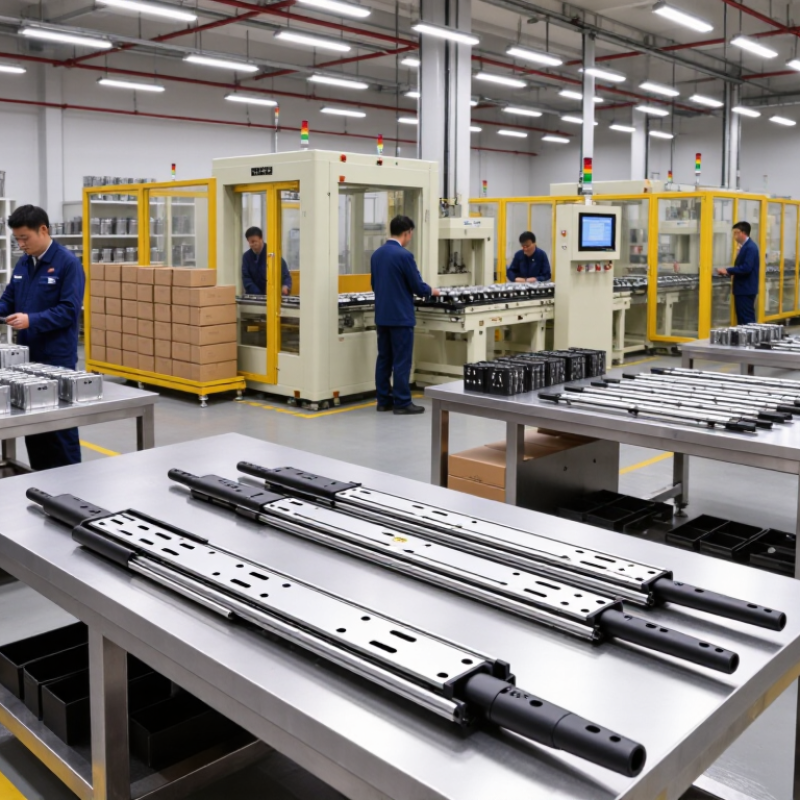
Latch slides are drawer slides fitted with a mechanical catch. The catch holds the drawer closed or open during movement. Many models use ball-bearing races, steel members, and a front release lever. Some designs lock in one position; others lock at both ends. That difference matters. A slide is not merely a rail. It controls alignment, travel, vibration, and access.
These slides appear in mobile tool cabinets, industrial enclosures, kitchen pull-outs, service vehicles, and storage consoles. They help prevent drawers from opening when equipment moves.
In a workshop, a locked drawer can protect precision tools from sudden impact. In a vehicle, the latch must resist vibration without becoming difficult to release.
Outdoor cabinets need plated or stainless materials, sealed bearings, and careful drainage. Indoor furniture may need less protection, but smooth operation still matters.
Choosing a latch slide requires more than matching drawer length. Check load rating, extension, mounting clearance, cycle life, and operating temperature.
Measure the load while moving, not only when stationary. A heavy drawer can multiply force when fully extended. This is often underestimated.
Factory documentation should show test methods, tolerances, material grades, and inspection records.
Sample testing remains useful because installation errors can hide a good product’s weakness. The first selection may not be perfect. Reviewing failed fit, noise, or latch release can improve the next order.
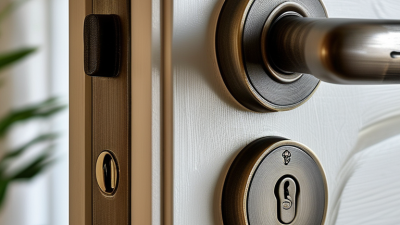
Choosing the best latch slide manufacturer in China requires more than comparing prices. Assess production experience, engineering skills, and quality controls. A reliable supplier should explain steel grades, surface treatment, load ratings, and locking mechanisms clearly. Ask for drawings with exact dimensions and tolerances. Vague answers usually create problems during installation.
Request samples before placing a large order. Inspect the slide by hand. Check whether the latch engages smoothly and releases without excessive force. Measure the closed length, extension, and mounting holes. In my sourcing experience, a sample can look excellent while hiding weak internal springs. Ask for cycle-testing records and load-test videos. Factory visits can also reveal storage conditions, inspection stations, and production consistency. Certifications help, but they do not replace physical testing.
Tips: Compare at least three suppliers using the same technical checklist. Confirm material thickness, salt-spray requirements, packaging, and inspection standards in writing. Ask whether production tolerances remain stable across repeated batches. One supplier may offer a lower quote, but thinner steel can increase failure risk. I once trusted a polished sample too quickly. The later batch had uneven locking pressure. That mistake changed my assessment process. Keep communication detailed, and treat every unverified claim as a question, not proof.
This buyer-oriented framework highlights the most important areas to review when comparing latch slide manufacturers for global sourcing. The percentages represent suggested evaluation weights, not the performance of any specific company or brand.
Prioritize verified quality control, load and cycle testing, corrosion protection, international compliance, customization capability, and delivery reliability. Request test reports, inspection records, material certificates, and sample approvals before placing a production order.
China Best Latch Slide Manufacturers for Global Buyers
Material choice shapes every latch slide’s service life. Stainless steel 304 suits indoor equipment and moderate humidity. Stainless steel 316 performs better near saltwater or chemical exposure. Zinc-plated carbon steel lowers cost, but damaged coatings can invite rust. For handles and guides, reinforced nylon reduces noise and protects painted surfaces.
Design details matter in daily use. A rounded slide handle should move without scraping fingers. A spring-loaded latch needs steady pressure, not sudden release. Mounting holes must match the buyer’s panel thickness and installation tools. In factory inspections, I check burrs, uneven plating, and loose rivets first. Small defects become expensive failures.
Performance testing should match the application. Ask for cycle-test results, pull-load data, and corrosion-test conditions. ASTM B117 exposure can compare coatings, but it does not predict every outdoor environment. Check whether reported hours used the same test setup. Request dimensional records and material certificates. ISO 9001 supports process control, yet it does not prove one latch is fit for your product. That distinction is often missed. A 304 latch may still fail when its spring wire, rivets, or coating is poorly selected. Buyers should review samples after heat, moisture, and repeated operation tests. Real use is less tidy than a catalog.
| Latch Slide Type | Common Materials | Typical Design Features | Typical Application | Indicative Performance Range* | Recommended Surface Finish | Relevant Testing or Compliance References |
|---|---|---|---|---|---|---|
| Stainless-Steel Sliding Latch | 304 stainless steel; 316 stainless steel for marine or high-chloride environments | Sliding bolt, keeper plate, mounting holes, optional spring detent or padlock provision | Outdoor cabinets, gates, enclosures, food-service and marine equipment | Typical static holding capacity: approximately 0.5–2.0 kN, depending on size, mounting, and load direction | Brushed, passivated, or electropolished stainless steel | ISO 9227 or ASTM B117 salt-spray testing where corrosion performance is specified; RoHS and REACH requirements for applicable markets |
| Zinc-Alloy Sliding Latch | Zinc alloy die casting with steel or stainless-steel internal components | Compact body, recessed or surface-mounted slide, optional key lock or safety catch | Electrical cabinets, access panels, industrial equipment and light-duty doors | Typical static holding capacity: approximately 0.3–1.5 kN, subject to housing geometry and fastener strength | Nickel, chrome, black powder coating, or electrostatic coating | Coating adhesion and corrosion tests; RoHS, REACH, and ISO 9001-based quality-control systems may be requested from suppliers |
| Paddle-Style Slide Latch | Stamped stainless steel, zinc alloy, or powder-coated carbon steel | Flush paddle handle, internal sliding bolt, concealed mounting hardware, optional locking cylinder | Truck bodies, toolboxes, machine guards, server cabinets and access doors | Typical operating life: 10,000–50,000 cycles when correctly aligned and lubricated; load rating varies by model | Powder coating, zinc plating, passivation, or black electrophoretic coating | Cycle testing, pull-load testing, vibration testing, and corrosion testing; IP rating should be verified separately when sealing is required |
| Quarter-Turn Slide Latch | Zinc alloy, stainless steel, or glass-filled engineering polymer with metal cam | 90-degree operating movement, interchangeable cams, compression option, keyed or tool-operated versions | Control cabinets, HVAC panels, automation equipment and industrial enclosures | Typical panel thickness: approximately 1–6 mm; sealing and load performance depend on cam and gasket configuration | Chrome-plated, black-coated, passivated, or engineering-polymer finish | IEC 60529 may be relevant for enclosure ingress protection; verify the complete enclosure assembly rather than the latch alone |
| Toggle-Action Draw Latch | 304 stainless steel, carbon steel, or zinc-plated steel | Over-center mechanism, adjustable hook, tensioning screw, and optional safety lock | Removable covers, cases, transport containers, machinery and inspection doors | Typical working load: approximately 0.5–3.0 kN; working load should be lower than ultimate failure load | Passivated stainless steel, zinc plating, or industrial powder coating | Static load, fatigue-cycle, vibration, and accidental-release testing should be defined by the equipment manufacturer |
| Heavy-Duty Sliding Bolt Latch | Carbon steel, heat-treated steel, or 316 stainless steel | Large-diameter bolt, reinforced keeper, anti-lift geometry, and padlock or hasp compatibility | Industrial gates, agricultural equipment, security cabinets and heavy access doors | Typical static holding capacity: approximately 1.0–5.0 kN or higher for reinforced assemblies | Hot-dip galvanizing, zinc plating, powder coating, or stainless passivation | Corrosion testing to ISO 9227 or ASTM B117; structural load testing should reflect the actual gate, frame, and fastener arrangement |
China-based latch slide manufacturers often serve furniture, storage, vehicle, and industrial equipment buyers. Their profiles differ by production strength, engineering depth, and export experience. A stamping-focused manufacturer may produce steel latch slides with progressive dies, automated punching, and zinc or nickel finishes. Buyers should inspect edge quality, spring tension, and cycle-test records.
Another profile is the precision-machining specialist. This supplier usually handles stainless steel parts, tighter tolerances, and small customized batches. Engineers may review CAD drawings, load requirements, mounting space, and corrosion exposure before sampling. Reliable factories provide material certificates, inspection reports, and traceable batch numbers. Factory visits can reveal practical details, such as clean assembly benches and calibrated gauges.
A third profile combines design, sourcing, assembly, and export support. This model suits overseas buyers needing packaging control, private specifications, and stable replenishment. Ask for sample approval procedures, production lead times, corrective-action records, and photographs from real inspections. Some manufacturers communicate well but document poorly. That weakness matters. A polished sample can also hide inconsistent spring force across larger batches. Independent testing remains useful for demanding applications. Evaluate worker training, process records, and response speed, not only quoted prices. Reliable cooperation grows through evidence, repeated sampling, and honest discussion of manufacturing limits.
Export performance depends on more than factory pricing. UNCTAD’s Review of Maritime Transport 2023 reported global maritime trade growth of 2.4% in 2023. Shipping remains sensitive to capacity, port delays, and freight changes. Buyers should request carton dimensions, loading plans, Incoterms, and export documents before placing orders. A supplier with clear packing photographs can prevent damaged slides, especially when steel parts move inside thin cartons.
Customization should begin with the application, not a catalog image. Provide load requirements, mounting space, hole patterns, finish, and operating temperature. Ask for CAD drawings and a production sample. For outdoor hardware, salt-spray testing under ASTM B117 can reveal coating weaknesses. It is not a perfect prediction of field life. Still, it creates a comparable reference. ISO’s 2022 Survey recorded more than 1.2 million ISO 9001 certificates worldwide, but certification alone cannot prove consistent latch performance.
Supplier selection needs measurable evidence. Review material certificates, inspection records, process controls, and corrective-action reports. Check whether the factory measures spring force, slide travel, closing alignment, and corrosion resistance. A pre-shipment inspection should sample finished units, not only packaging. Request traceability from steel batch to carton label. The cheapest quotation may hide tooling fees or unstable tolerances. I have found that sample approval is often too informal. That deserves more discipline. A signed drawing, approved sample, and agreed defect limits protect both sides during repeat exports.