Choosing among China’s top Hinge Handle manufacturers requires more than comparing catalog prices. Furniture and cabinet hardware supports a large, competitive supply chain. Grand View Research estimates that the global furniture market reached approximately USD 516.66 billion in 2022. It also projects continued growth through 2030, driven by renovation, residential construction, and commercial interiors. These trends increase demand for reliable handles, accurate hinges, and coordinated hardware systems.
The right supplier should demonstrate practical manufacturing experience. Ask for material specifications, surface-treatment details, dimensional tolerances, and cycle-test results. Stainless steel, zinc alloy, aluminum, and brass offer different balances of strength, weight, corrosion resistance, and cost. A serious factory should explain these differences clearly. It should also provide samples matching the final production process, not only showroom pieces.
Look closely at the details.
Check screw alignment, edge finishing, plating consistency, and packaging protection. Request factory-audit evidence, quality-control records, and applicable test reports. ISO 9001 certification can support process credibility, but it does not guarantee every batch will be perfect. That limitation matters. Supplier evaluation should also include communication speed, mold ownership, minimum order quantity, replacement procedures, and export experience.
Industry research from MarketsandMarkets and other hardware-sector analysts shows that customization and durable finishes remain important purchasing factors. However, market reports cannot replace physical inspection. A polished website may conceal weak process control. An attractive sample may not represent mass production. Buyers should compare several China manufacturers, test Hinge Handle samples under realistic use, and document every technical requirement before signing a purchase agreement.
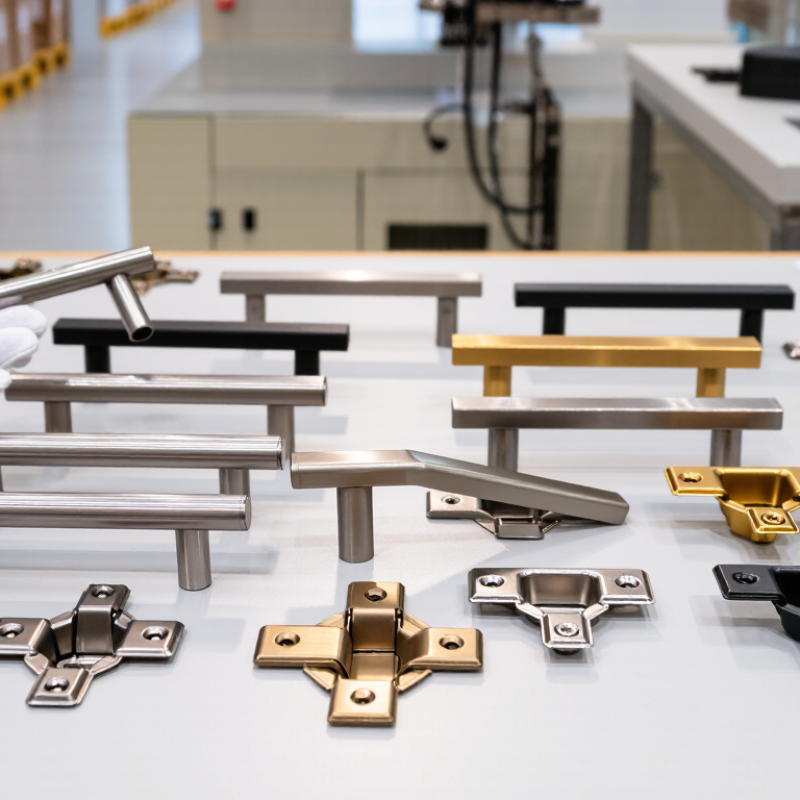
What Are Hinge Handles and Where Are They Used?
Hinge handles combine a gripping point with a pivoting or hinged movement. Unlike fixed pulls, they can fold, swing, or remain flush against a panel. This design helps reduce snagging in narrow spaces. It also supports easier access to cabinet doors, equipment covers, toolboxes, and electrical enclosures.
Their applications are practical and varied. Furniture makers use them on storage cabinets and compact kitchen units. Industrial users install them on control boxes, machine guards, and inspection panels. Marine, transport, and outdoor equipment often require corrosion-resistant materials and sealed construction. Grand View Research valued the global furniture market at approximately US$516.66 billion in 2022, with continued growth projected through 2030. Research and Markets also identifies cabinet hardware as a growing product segment, driven by renovation and modular furniture demand.
Material choice matters. Zinc alloy suits decorative indoor furniture, while stainless steel performs better in humid or demanding environments. A reliable hinge handle should open smoothly, resist looseness, and match the panel thickness. Buyers sometimes focus only on appearance. That is a mistake. Load testing, cycle testing, mounting accuracy, and surface durability deserve equal attention. Terminology can vary between suppliers, so drawings and sample testing remain important. Small details matter.
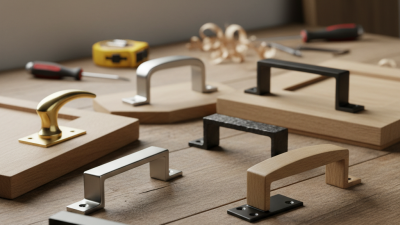
A reliable hinge handle manufacturer shows evidence, not promises. Start with material control. Ask whether stainless steel, zinc alloy, or aluminum grades are verified through incoming inspection records. A handle should open smoothly, resist corrosion, and maintain alignment after repeated use. Testing matters.
The 2022 ISO Survey recorded more than 1.26 million ISO 9001 certificates worldwide. Certification alone proves little, though. Check whether the factory links inspection results to each production batch. Useful records include hardness, coating thickness, load testing, and dimensional reports. Request samples from regular production, not specially prepared pieces. That small detail exposes consistency.
Digital traceability is another strong signal. Deloitte’s 2023 smart manufacturing research found that 86% of manufacturing leaders expected smart operations to become a major competitiveness driver within five years. A capable supplier should therefore track tooling changes, process approval, and corrective actions electronically. It should also explain failure handling without vague language.
Ask about mold maintenance and replacement timing. Poorly maintained tooling can leave sharp edges or uneven gaps.
Ergonomics deserve equal attention: the grip should feel stable with wet or gloved hands. Packaging should prevent scratches before installation.
Be cautious with unusually low quotations. Hidden compromises often appear in plating, testing, or after-sales response. I would also inspect communication speed, because delayed technical answers can become production delays. No factory is perfect. Reliable manufacturers admit limitations, document them, and improve them.
China Top Hinge Handle Manufacturers: How to Choose?
Comparing China’s hinge handle manufacturers requires more than checking catalog photos. Production capability begins with material control. Ask whether the factory tests stainless steel, zinc alloy, or aluminum batches before machining. UN Comtrade data identifies China as a major exporter under HS 8302.42, covering base-metal fittings for furniture. Export volume shows capacity, not consistency. That distinction matters.
Inspect the factory’s process sheet. It should show stamping, CNC machining, polishing, coating, assembly, and final inspection. Request dimensional records from actual production lots, not only sample reports. ISO 9001 certification supports process discipline, but it does not prove handle durability. For surface resistance, ask for salt-spray results referencing ISO 9227. For furniture fittings, EN 15570 provides useful guidance on strength and durability testing. Still, standards may not match your door weight or installation environment.
Look closely at the hinge pin, screw seat, and edge finish. A handle can feel smooth while hiding weak threads. Ask for cycle-test data, coating thickness, and failure photographs. Third-party laboratory reports add credibility when test samples carry traceable batch numbers. I have seen attractive samples fail after repeated tightening. Small details matter. Factory audits should also review calibration records, rejected-part storage, and corrective-action logs. Some suppliers answer quickly but measure poorly. That is worth questioning. A practical comparison should include tooling ownership, monthly capacity, lead-time history, and the supplier’s willingness to repeat testing when results look inconvenient.
| Comparison Dimension | What to Compare | Basic Capability | Advanced Capability | Recommended Evidence | Suggested Weight |
|---|---|---|---|---|---|
| Material Selection | Stainless steel, carbon steel, aluminum, zinc alloy, brass, and engineering plastics suitable for the application. | Can process one or two common materials with basic material certificates. | Provides multiple material options, heat-treatment control, traceability, and application-specific recommendations. | Mill certificates, material grades, supplier traceability records, and sample test reports. | 10% |
| Hinge and Handle Design | Load path, mounting pattern, clearance, ergonomic grip, opening angle, and installation space. | Modifies existing drawings and offers standard configurations. | Uses 3D CAD, tolerance analysis, design-for-manufacturing reviews, and prototype validation. | 2D drawings, 3D models, design review records, prototypes, and engineering change history. | 12% |
| Tooling and Die Capability | Stamping dies, forging dies, die-casting molds, CNC fixtures, and replacement-part control. | Relies mainly on standard tooling or external tooling suppliers. | Maintains in-house or closely controlled tooling development, preventive maintenance, and revision records. | Tooling list, maintenance plan, mold-flow or forming review where applicable, and first-article records. | 10% |
| Machining and Forming Precision | Dimensional control of pivot holes, mounting faces, pin locations, and handle alignment. | Uses manual inspection and general-purpose equipment for non-critical dimensions. | Uses CNC machining, calibrated gauges, fixture control, and documented process capability studies. | Inspection plans, capability data such as Cpk, gauge calibration certificates, and sample measurement reports. | 14% |
| Surface Treatment | Finish type, coating adhesion, color consistency, wear resistance, and corrosion protection. | Provides common polishing, plating, painting, or powder-coating options. | Controls pretreatment, coating thickness, curing, adhesion, appearance, and batch traceability. | Coating specification, thickness readings, adhesion results, color records, and corrosion-test reports. | 12% |
| Mechanical Performance Testing | Static load, operating torque, deformation, wear, and repeated opening-and-closing performance. | Performs visual inspection and basic functional checks. | Uses application-specific test fixtures, defined acceptance criteria, and documented cycle or load testing. | Test procedures, fixture photographs, raw data, failure criteria, and signed test reports. | 14% |
| Quality Management | Incoming inspection, in-process control, final inspection, nonconformance handling, and corrective action. | Maintains basic inspection records and shipment checks. | Operates a documented quality system aligned with ISO 9001 principles and uses root-cause corrective action. | Valid ISO 9001 certificate where applicable, process flow charts, control plans, audit records, and CAPA reports. | 12% |
| Production Capacity and Lead Time | Available equipment, monthly capacity, changeover time, bottleneck processes, and peak-season planning. | Can support small or repeat orders with limited production planning. | Uses capacity planning, production scheduling, preventive maintenance, and documented on-time delivery metrics. | Equipment list, capacity plan, sample production schedule, maintenance records, and delivery performance data. | 8% |
| Traceability and Documentation | Batch identification, drawing revision, material lot, inspection result, and shipment records. | Tracks purchase orders and basic shipment information. | Links raw materials, production batches, inspections, packaging, and corrective actions through an ERP or controlled system. | Sample batch record, barcode or lot system, document-control procedure, and retention policy. | 6% |
| Compliance and Sustainability | Restricted substances, workplace controls, environmental permits, and customer-specific compliance requirements. | Provides compliance declarations when requested. | Maintains documented chemical controls, supplier declarations, environmental procedures, and applicable product compliance records. | Material declarations, safety data sheets, environmental certificates, audit records, and applicable test reports. | 6% |
| Total Suggested Evaluation Weight | 100% | ||||
When evaluating China hinge handle manufacturers, inspect their quality system before comparing prices. A reliable supplier should provide material certificates, batch records, and clear inspection procedures. Ask for the alloy grade, surface treatment details, and production tolerances. Material traceability matters.
Testing must reflect real use. For cabinet or furniture handles, suppliers should conduct repeated opening cycles, pull-force tests, and corrosion testing. Test fixtures should match the handle’s actual mounting method. Request dated reports, not only attractive samples. Samples can mislead.
Surface quality also deserves close attention. Edges should feel smooth, with no sharp burrs or visible casting marks. Coatings need consistent color, adhesion, and resistance to normal cleaning agents. Dimensional checks should confirm hole spacing and screw compatibility. Small variations can cause installation problems.
In factory audits, I have seen polished samples hide weak batch control. One attractive sample proves little. Supplier records should identify inspectors, inspection dates, and rejected quantities. An honest supplier will explain limitations instead of promising perfection. Some workshops still rely heavily on visual checking; that weakness deserves discussion and corrective action. Choose suppliers that combine practical testing, trained inspectors, documented processes, and responsive communication.
EN 1670 classifies the corrosion resistance of building hardware. The chart shows the minimum neutral salt spray exposure associated with corrosion-resistance Classes 1–5. When choosing a hinge handle supplier, request test reports, material certificates, coating specifications, dimensional inspection records, and batch traceability. Higher resistance classes generally indicate stronger protection for humid, outdoor, or frequently handled applications.
Choosing the right China hinge handle manufacturer requires more than comparing catalog prices. Look for proven production experience, clear material specifications, and stable quality controls. Ask whether the handles use stainless steel, zinc alloy, aluminum, or another suitable material. Request test reports for corrosion resistance, load performance, and repeated opening cycles. Samples reveal more.
Inspect the sample closely. Check the hinge movement, screw alignment, surface finish, and edge smoothness. A reliable manufacturer should explain its tolerances and inspection process without avoiding practical questions. Ask for factory photographs, production records, and a sample approval procedure. I have learned that a polished catalog can still hide inconsistent batches. Ask for evidence.
Communication also matters during customization. Confirm drawings, dimensions, packaging, minimum order quantity, and delivery dates in writing. Discuss how defects are recorded and replaced. A small pilot order can expose problems before full production begins. One overlooked detail, such as a two-millimeter mounting error, may delay installation. Do not judge reliability from fast replies alone. Review how carefully the manufacturer handles changes, testing, and corrective action. If the supplier admits a previous mistake and explains the fix, that honesty may be more valuable than a perfect sales presentation.