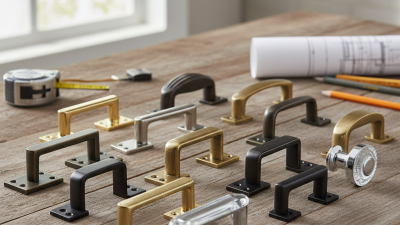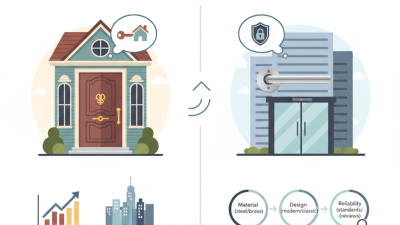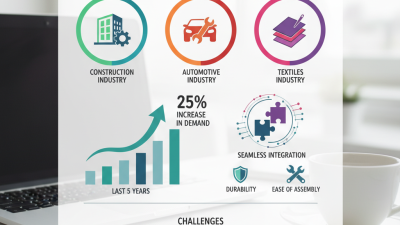
China’s hardware manufacturing base has become a major sourcing destination for cabinet, furniture, kitchen, and architectural fittings. This guide examines ten Chinese manufacturers worth considering when purchasing Hinge Handle products for commercial or residential projects. It focuses on production capability, material quality, customization, export experience, certifications, and after-sales support.
Industry data supports this market’s importance. Grand View Research reports that the global furniture market continues to expand, driven by housing construction, renovation, hospitality, and modular interiors. Mordor Intelligence also identifies Asia-Pacific as a leading region for furniture production and consumption. These trends create steady demand for durable handles, concealed fittings, and coordinated hardware collections. However, market reports often group handles with broader furniture hardware. Their figures are useful, but not perfectly specific.
Details matter.
A reliable Hinge Handle supplier should explain alloy composition, surface treatment, load performance, salt-spray testing, and dimensional tolerances. Product photographs are not enough. A sample should feel balanced in the hand, align cleanly with pre-drilled holes, and retain its finish after repeated cleaning. Manufacturers with CNC machining, automated polishing, powder coating, or electroplating facilities may offer better consistency at scale. Yet factory size alone does not guarantee dependable quality.
This ranking therefore considers technical documentation, factory capacity, customization experience, export markets, and verified customer feedback. It also recognizes an uncomfortable reality: public company information can be incomplete, outdated, or promotional. Buyers should request current certificates, production samples, inspection records, and transparent quotations before making a final decision. The best supplier is not always the largest one. Often, it is the manufacturer that communicates clearly, identifies limitations honestly, and delivers the same Hinge Handle quality from the first carton to the last.
Hinge handles are fittings that combine a grip with a pivoting movement. They allow a panel, door, lid, or enclosure to open while keeping the handle aligned with the user’s hand. Unlike fixed pulls, these handles reduce unwanted force on hinges and surrounding surfaces. They are commonly used on industrial cabinets, electrical enclosures, tool cases, storage boxes, ovens, furniture, and access panels.
A reliable hinge handle should match the panel’s weight, opening angle, and operating frequency. Materials such as zinc alloy, stainless steel, and reinforced plastic offer different levels of strength, corrosion resistance, and cost. In practical inspections, loose pivots and sharp edges often reveal poor fitting or unsuitable hardware. Installation also matters. Misaligned holes can cause friction, rattling, or uneven sealing. That detail is easy to overlook.
Tips: Measure the mounting pattern before purchasing. Check the handle’s load rating and surface finish. For outdoor or humid locations, corrosion-resistant materials are safer. Test the opening motion with gloves if workers will use them. A handle may look sturdy but still flex under repeated force. I would also inspect replacement parts, because maintenance needs are sometimes ignored during selection. Small differences in hinge clearance can affect the entire enclosure.
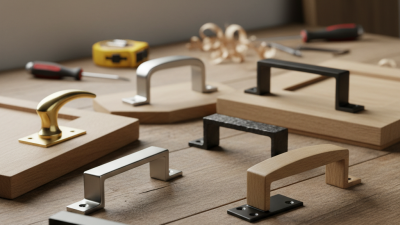
Choosing among China’s top ten hinge handle manufacturers requires evidence, not polished catalogues. Define the required load, finish, mounting method, and annual volume before requesting quotations. The World Bank’s 2023 Logistics Performance Index gave China a score of 3.7 out of 5. Use this as a supply-chain signal, not proof of factory quality.
Ask for material certificates, coating specifications, dimensional tolerances, and recent inspection records. For stainless steel handles, verify the grade with independent testing when the application faces moisture or cleaning chemicals. Request samples from normal production, not specially prepared pieces. Check screw fit, burrs, edge comfort, hole spacing, and hinge movement by hand. Small defects become expensive after installation.
Audit traceability from raw material receipt to final packing. A manufacturer should explain batch coding, corrective actions, and replacement procedures clearly. ISO 9001 registration helps, but it does not guarantee handle performance. UN Comtrade data places many fittings under HS 8302, a category that also includes hinges and other base-metal hardware. Compare suppliers carefully; the category is broad. A low export price may hide thinner plating, weaker alloys, or inconsistent tolerances. I would not trust a perfect sample alone. Independent testing and a pilot order reveal more. Certain details still get overlooked. Production capacity claims need checking against machine lists, staffing, and delivery records.
China’s top ten hinge handle manufacturers should be judged by more than catalog variety. A reliable supplier should show material specifications, production photos, and recent test records. Look for stainless steel, zinc alloy, or reinforced nylon options, depending on the product’s weight and environment. Handles used near moisture need stronger corrosion resistance. Small details matter.
Ask each manufacturer for samples before placing a large order. Check the hinge movement, screw alignment, surface finish, and opening force by hand. For cabinet or equipment applications, request cycle testing and load data. A professional factory should explain its tooling process, inspection points, minimum order quantity, and expected production schedule. Clear answers usually reveal practical experience.
Factory audits can also improve purchasing confidence. Review quality systems, worker safety procedures, packaging methods, and export documentation. Independent testing may be useful for demanding projects. Still, no supplier is perfect. A polished sample may hide inconsistent batches, and a low price can bring thinner metal or weaker plating. I would compare at least three quotations and record every technical promise in writing. Communication speed is helpful, but accurate answers matter more. The best choice may not be the cheapest one. It is the manufacturer that can repeat the same fit, finish, and performance after the first shipment.
When comparing China’s top hinge handle manufacturers, quality should be judged through evidence, not attractive samples. Inspect the handle surface for sharp edges, uneven plating, loose joints, and visible casting marks. Ask for material grades, dimensional tolerances, and documented load-cycle testing. A reliable supplier should explain how hinges perform after repeated opening, vibration, and humidity exposure. Small details matter.
Certification also needs careful checking. ISO 9001 can indicate controlled production systems, but it does not prove every handle is durable. Request current certificates, issuing-body details, and matching factory information. For specific markets, review applicable CE, RoHS, REACH, or other regulatory documentation. Test reports should identify the tested material and model. Generic files deserve questions. Sometimes, buyers accept paperwork too quickly.
Service quality becomes visible after the purchase order. Strong manufacturers provide clear drawings, samples, inspection standards, packaging details, and realistic lead times. Confirm who handles tooling changes and how defects are investigated. Ask for batch traceability, replacement procedures, and written warranty terms. Communication speed matters, but technical accuracy matters more. A fast reply cannot repair poor tolerances. Independent pre-shipment inspection adds useful confidence, especially for new suppliers. Still, no audit removes every risk. Review performance regularly and keep specifications updated.
This non-brand benchmark allocates a 100-point purchasing score across the factors most relevant to hinge handle sourcing. Quality consistency and product testing receive the highest weight, followed by certification, corrosion resistance, customization capability, delivery reliability, and after-sales service.
Choosing among China’s top 10 hinge handle manufacturers requires more than comparing prices. Your project needs a supplier that understands load, movement, installation space, and daily use. Request physical samples before approval. Check screw alignment, hinge resistance, handle comfort, and surface consistency under direct light. Ask for material specifications, dimensional tolerances, coating details, and inspection records. A polished catalog can still hide uneven finishing or weak internal components.
Production capability matters just as much. Confirm whether the manufacturer controls stamping, machining, polishing, and assembly in-house. Review testing methods, including repeated opening cycles and corrosion resistance. Clear drawings, traceable batches, and stable communication reduce costly revisions. Delivery promises should include tooling time, sample approval, packaging, and realistic production capacity. Low pricing is tempting. It may become expensive after defects, delays, or repeated freight.
Tips: Compare at least three samples using the same checklist. Ask for a small pilot order before scaling. Inspect random pieces, not only selected samples. Verify certifications against your target market’s requirements. Leave room for improvement; even a reliable supplier may miss a detail in the first round. A useful question is simple: “What could fail after one year?” The answer often reveals more than a sales presentation.
| No. | Manufacturer Selection Dimension | Recommended Weight | Target Score | Reliable Evidence to Request | Common Purchasing Risk | Best-Practice Evaluation Method |
|---|---|---|---|---|---|---|
| 1 | Material and Grade Control | 15% | 5 / 5 | Material certificates, alloy or stainless-steel grade information, incoming inspection records, and coating specifications. | Substitution of lower-grade metal, inconsistent hardness, or unclear material composition. | Match the approved drawing and bill of materials with the supplier's inspection report and a pre-production sample. |
| 2 | Manufacturing Process Capability | 12% | 5 / 5 | Process flow chart covering stamping, die casting, forging, CNC machining, polishing, plating, painting, and assembly where applicable. | The supplier outsources critical operations without effective process control. | Audit the production route and identify which processes are performed in-house and which are subcontracted. |
| 3 | Dimensional Accuracy and Fit | 12% | 5 / 5 | Approved technical drawings, tolerance tables, first-article inspection reports, and calibrated measuring-equipment records. | Loose fit, incorrect hole spacing, handle misalignment, or installation problems during assembly. | Define critical dimensions, tolerances, mounting-hole positions, and functional fit requirements before quotation. |
| 4 | Surface Finish and Corrosion Resistance | 12% | 5 / 5 | Finish samples, coating thickness records, salt-spray test results where required, and cleaning or passivation procedures. | Color variation, peeling, blistering, fingerprint marks, rust, or premature wear. | Approve a physical golden sample and specify the finish, gloss, color tolerance, corrosion requirement, and inspection method. |
| 5 | Load, Cycle, and Functional Testing | 12% | 5 / 5 | Load-test procedures, cycle-test records, torque data, failure criteria, and product-specific inspection standards. | Handle loosening, hinge failure, deformation, noise, or reduced service life under repeated use. | Set measurable load and cycle requirements based on the intended door, cabinet, furniture, or industrial application. |
| 6 | Quality Management System | 10% | 4 / 5 | A current ISO 9001 certificate, quality manual, corrective-action records, inspection plans, and traceability procedures. | Quality depends on individual operators and defects are discovered only after delivery. | Verify certificate validity independently and review how nonconforming products, rework, and customer complaints are handled. |
| 7 | Customization and Tooling Support | 9% | 4 / 5 | Engineering drawings, 3D models, prototype samples, tooling ownership terms, mold-maintenance procedures, and revision control. | Unexpected tooling charges, slow engineering changes, or unauthorized use of proprietary designs. | Confirm tooling ownership, modification costs, sampling stages, intellectual-property protection, and engineering response times in writing. |
| 8 | Production Capacity and Lead Time | 8% | 4 / 5 | Monthly capacity information, production schedule, equipment list, raw-material planning method, and historical on-time delivery data. | Delays caused by overloaded equipment, material shortages, seasonal demand, or poor production planning. | Compare quoted lead time with actual capacity and require a written production schedule for pilot and mass-production orders. |
| 9 | Packaging and Export Readiness | 5% | 4 / 5 | Packaging drawings, carton specifications, drop-test approach, labeling format, pallet configuration, and export documentation samples. | Scratches, deformation, missing components, incorrect labels, or damage during long-distance transportation. | Approve packaging through a trial shipment and specify unit protection, quantity per carton, carton marks, and spare-parts policy. |
| 10 | Commercial Transparency and Service | 5% | 4 / 5 | Clear quotation, payment terms, minimum order quantity, warranty terms, replacement policy, communication records, and inspection agreement. | Hidden tooling or logistics costs, unclear warranty responsibility, and slow responses after payment. | Use a written purchase specification covering price validity, Incoterms, quality acceptance, delivery terms, and dispute resolution. |
| Evaluation note: Use this anonymous, brand-neutral matrix to compare Chinese hinge-handle suppliers without relying on company names alone. A practical decision should combine document verification, sample approval, factory or third-party inspection, and a controlled pilot order. The recommended weights total 100% and can be adjusted according to the project's material, load, finish, volume, and compliance requirements. | ||||||