Choosing a China best Rod Lock manufacturer requires more than comparing catalog prices. The decision affects cargo security, installation time, maintenance, and delivery reliability. A suitable supplier should provide tested materials, consistent dimensions, traceable production, and clear technical support. Ask for drawings, load data, surface-treatment details, and sample inspection records before placing a larger order.
The World Bank’s Logistics Performance Index 2023 ranked China 19th globally, with a score of 3.7. This reflects strong logistics capability, but it does not prove that every factory performs equally. UNCTAD’s Review of Maritime Transport 2023 also highlights continuing pressure on global shipping networks. Delays can expose weak suppliers quickly. Check their export experience, packaging method, lead-time history, and response process for damaged or incorrect parts. A factory audit, video inspection, or independent quality check can reveal details that brochures hide.
Material selection matters. Carbon steel may suit heavy-duty applications, while stainless steel helps resist moisture and corrosion. Confirm tube diameter, locking-pin strength, welding quality, and coating thickness. Request salt-spray or corrosion-test evidence when the Rod Lock will face coastal air or road chemicals. Certifications help, but certificates alone are not enough. Production samples should match approved samples.
No factory is perfect. Even experienced buyers can overlook small tolerance differences. A lower quotation may hide thinner steel, weaker springs, or limited after-sales support. Compare total ownership cost, not only unit price. The strongest choice combines measurable quality, transparent communication, stable capacity, and practical experience with your application.
China Best Rod Lock Manufacturer: How to Choose?
What Is a Rod Lock and Why Does Manufacturer Selection Matter?
A rod lock secures a moving shaft when motion must stop or position must hold. Pneumatic models clamp the rod using friction, spring force, or both. They appear in presses, conveyors, lifting axes, and robotic fixtures. The component looks small. Its responsibility is not. The International Federation of Robotics reported 541,302 industrial robots installed worldwide in 2023. That scale increases demand for dependable motion-control components.
Manufacturer selection matters because holding force alone is not enough. Ask for tested load ratings, response times, cycle-life evidence, and leakage limits. Check rod diameter tolerance, surface hardness, lubrication needs, and emergency-release behavior. A credible supplier should provide traceable inspection records and clear installation instructions. ISO 9001 certification supports process discipline, but it does not prove every model performs well. Request application testing under real loads, including vibration and temperature changes. Grand View Research estimated the industrial automation market at USD 191.9 billion in 2021, showing the sector’s scale. Growth can hide weak purchasing decisions.
During comparison, calculate the actual stopping load, not only the nominal payload. Include acceleration, shock, air pressure variation, and wear. A spring-engaged design may suit pressure-loss conditions, while a pneumatic-release design may simplify maintenance. These choices depend on the machine’s risk assessment. Do not treat a rod lock as a substitute for guarding or a validated safety system. No checklist is perfect. I would also challenge my first impression: polished documentation can distract from poor test transparency. Choose the manufacturer that answers uncomfortable questions with measured data.
A high-quality rod lock begins with material selection, not appearance. The Outdoor Foundation’s 2024 Special Report on Fishing recorded 57.8 million U.S. participants in 2023. That scale means rod hardware faces frequent handling, vibration, and exposure to water.
For saltwater use, 316 stainless steel offers stronger corrosion resistance than common 304 stainless steel. Anodized aluminum can reduce weight while maintaining useful surface hardness. Glass-filled nylon suits housings because it resists impact and repeated temperature changes. However, plastic alone may feel secure during testing and loosen after months of vibration.
Design details reveal manufacturing experience. A reliable lock should distribute pressure around the rod, rather than crush one narrow point. Rounded contact surfaces protect delicate finishes. Silicone or TPU inserts can improve grip without leaving deep marks.
Drainage openings matter after rain or a spray-filled boat deck. A spring-loaded latch should operate with one hand, yet resist accidental release. Small details matter.
Testing needs evidence. ASTM B117 salt-spray testing can compare corrosion resistance, but it does not reproduce every marine condition. A responsible manufacturer should also document cycle testing, pull-force results, dimensional tolerances, and material certificates.
I would inspect the hinge after repeated opening, not only the polished exterior. Some designs still look excellent while their pins wear prematurely. That weakness is easy to miss. Ask for batch records and independent test data before choosing a China rod lock manufacturer.
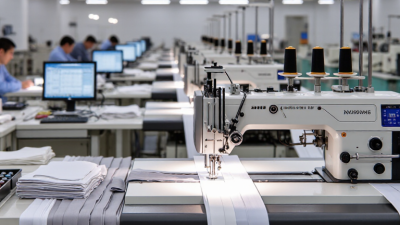
When evaluating a rod lock manufacturer, inspect production evidence, not attractive showroom displays. A polished factory tour is not enough. Ask for process records, equipment lists, and recent inspection reports. The facility should show clear control from raw material receiving to final packing. Check whether workers use calibrated gauges during critical measurements. CNC machining, drilling, threading, and surface treatment should follow documented procedures. Consistent fixtures can reduce alignment errors in repeated orders.
Request samples from different production batches. Compare thread accuracy, locking movement, surface finish, and dimensional tolerance. A reliable supplier should explain its testing method and acceptance criteria. Ask how it manages incoming steel, heat treatment, corrosion testing, and load verification.
Traceable batch numbers are valuable when a defect appears months later. Production capacity also needs practical proof. Review monthly output, machine availability, staffing, and peak-season lead times. A large equipment list means little if key processes depend on outside workshops.
Speak with the quality manager and production supervisor, not only a sales representative. Their answers often reveal real technical experience. Ask for a corrective-action report with sensitive information removed. The response should show root-cause analysis, not blame. No factory runs perfectly. I would treat an honest record of a minor defect as more credible than a claim of zero problems. Also, confirm whether the manufacturer can adjust tooling for your rod diameter and locking force. Small misunderstandings here can create expensive rework. Evaluate communication during sample approval, because production discipline often appears before the purchase order.
When choosing a rod lock manufacturer, buyers should inspect quality evidence, not only surface finish. ISO’s 2022 Survey recorded 1,265,216 ISO 9001 certificates worldwide. Certification helps, but it does not prove every rod lock is reliable. Ask for the certificate scope, audit date, and production site. A factory should also provide material certificates, batch numbers, dimensional records, and calibration records for measuring equipment.
Testing should match the lock’s actual service conditions. Check rod diameter, locking engagement, opening force, tensile strength, hardness, and repeated-cycle performance. ASTM E8 tensile methods can support metal strength verification, while corrosion testing may follow ISO 9227 when outdoor exposure is expected. Request test results from independent laboratories when possible. Salt spray hours alone can mislead. Real installation stress may be different.
Inspect samples personally. Move the handle, feel the latch, and measure clearance with a gauge. Ask whether tests use finished assemblies, not only raw steel. A strong rod can still fail because of weak welds, poor heat treatment, or loose alignment. This is often overlooked. Suppliers should explain their acceptance limits and corrective-action process. I would not accept a generic “passed inspection” statement without traceable records. Standards provide structure, but field feedback remains essential; buyers should review failure data, service cycles, and returned-part analysis before approving a long-term supplier.
China Best Rod Lock Manufacturer How to Choose?
Comparing rod lock manufacturers requires more than checking the lowest quotation. Ask for a detailed price sheet covering materials, machining, surface treatment, packaging, and tooling. A cheaper unit may use thinner steel or weaker threads. Request samples and inspect thread smoothness, locking force, corrosion protection, and dimensional consistency. I once accepted a low quote without checking packaging. Several pieces arrived scratched. That mistake changed my purchasing checklist.
Customization should be written clearly. Confirm rod diameter, lock length, mounting holes, logo method, color, tolerances, and testing requirements. Ask whether custom tooling costs are separate. Delivery discussions should include sample time, production time, inspection time, and shipping documents. A reliable supplier gives realistic dates instead of promising everything immediately. Delays can still happen, though, especially during material shortages. Leave some schedule space.
Tips: Compare at least three written quotes. Ask for recent inspection records and production photos. Confirm the warranty period, spare-part policy, response time, and replacement process. A useful after-sales contact should explain problems with photos and measurements, not only offer vague apologies. Video calls can reveal factory organization, but they do not replace independent inspection. Sometimes I overvalue polished presentations. Actual consistency matters more.
| Supplier Type | Typical Unit Price (USD, EXW) |
Typical MOQ | Standard Lead Time | Customization Capability | Material and Finish Options | Quality Documentation | Warranty Benchmark | After-Sales Response Target | Best Fit |
|---|---|---|---|---|---|---|---|---|---|
| Standard catalog supplier | $1.20–$3.50 | 100–500 pieces | 15–25 days | Limited to hole spacing, mounting plate, finish, and packaging | Carbon steel or stainless steel; zinc-plated, powder-coated, or passivated finishes | Basic dimensional inspection report; material certificate usually available on request | 6–12 months | 1–2 business days for acknowledgment | Price-sensitive projects using established dimensions |
| Configurable OEM supplier | $2.50–$7.50 | 200–1,000 pieces | 25–40 days | Custom dimensions, rod diameter, locking geometry, logo-free packaging, and assembly requirements | 304 stainless steel, carbon steel, or alloy steel; plating and coating selected by application | Inspection plan, sample approval, batch inspection report, and traceability records | 12 months | Within 1 business day for technical or quality issues | Recurring orders requiring moderate design adaptation |
| Heavy-duty industrial supplier | $6.00–$18.00 | 50–300 pieces | 35–60 days | High flexibility for load requirements, corrosion exposure, security features, and installation constraints | Heat-treated alloy steel, stainless steel, reinforced housings, and specialized protective coatings | Material certificates, process records, load testing, dimensional reports, and pre-shipment inspection | 12–24 months | Same business day or within 24 hours for critical cases | Transport equipment, industrial enclosures, and demanding outdoor applications |
| Small-batch custom manufacturer | $8.00–$30.00 | 10–100 pieces | 20–45 days after drawing approval | Prototype tooling, custom drawings, reverse engineering, and low-volume engineering changes | Material and finish selected according to drawings, environment, and performance requirements | First-article inspection report and dimensional report; additional testing may incur a separate fee | 6–12 months | 1–3 business days | Prototype development, replacement parts, and specialized low-volume orders |
| Export-focused full-service supplier | $3.50–$12.00 | 100–500 pieces | 30–50 days, excluding transit | Product customization plus export packaging, labeling, documentation, and shipment coordination | Common steel and stainless-steel options with export-suitable corrosion protection | Pre-shipment inspection, packing list, commercial invoice, certificate of origin, and agreed test reports | 12 months | Within 24 hours; replacement or credit terms should be written into the contract | International buyers prioritizing delivery coordination and documentation |
| How to compare quotations: Confirm that prices use the same material grade, dimensions, surface treatment, packaging method, inspection scope, Incoterm, and payment terms. The ranges above are typical procurement benchmarks rather than fixed offers; actual prices vary with design complexity, order quantity, testing requirements, tooling, shipping method, and commodity costs. | |||||||||