How to Choose the Right Hinge Handle for Your Project?
Choosing the right Hinge Handle starts with understanding how the door will be used. A kitchen cabinet, workshop gate, and heavy service door need different solutions. Each one creates different loads, clearances, and maintenance demands.
Lori Greene, an architectural hardware consultant and writer, often reminds professionals, “Hardware should make the door easier to use, not harder to understand.” That principle matters when selecting a Hinge Handle. A well-designed handle should fit the user’s grip, match the door’s weight, and allow comfortable movement without scraping nearby surfaces. Measure the door thickness, hinge position, opening angle, and available hand clearance before comparing products. Small details matter.
Test it physically.
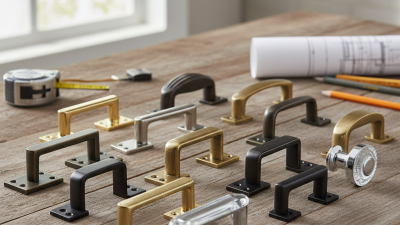
Place a sample handle on the door whenever possible. Check whether a gloved hand can hold it securely. Notice sharp edges, loose movement, and awkward wrist angles. A round grip may feel comfortable in one setting, yet become slippery near water or oil. A textured finish can improve control, but it may collect dirt over time. Stainless steel offers durability, while coated finishes create more visual options. Neither choice is perfect.
Consider the environment carefully. Outdoor projects may require corrosion-resistant materials and sealed fasteners. High-use doors need stronger construction than decorative interior applications. Product specifications deserve attention, but they do not replace practical testing. I have seen attractive hardware fail because the handle was too short for the door’s weight. That mistake is easy to overlook. Review installation instructions, confirm compatibility, and ask a qualified supplier when the application involves unusual loads or specialized door requirements.

Define the Project’s Functional and Design Requirements
Choosing a hinge handle starts with the project, not the hardware display.
Define how the door, lid, or panel will move each day. Measure its weight, opening angle, clearance, and expected use frequency. A light cabinet door needs different support from a heavy access panel. Check the mounting surface before selecting a handle. Thin sheet metal may need reinforcement.
This detail is often missed.
Function should guide the handle shape and hinge action.
Decide whether users need a firm pull, a flush grip, or one-handed operation. In a damp room, corrosion-resistant materials deserve priority. In a busy workshop, rounded edges can reduce snagging and hand discomfort. Leave enough finger clearance, especially when gloves are common. Confirm the handle will not strike nearby walls or equipment. Review the installation method, screw length, alignment, and service access.
A strong handle can still fail when installers cannot reach its fasteners.
Design requirements should support the setting rather than distract from it.
Match the finish, proportions, and visual weight to the surrounding surface. Test a sample at full scale if possible.
I once approved a compact handle that looked precise but felt awkward during repeated use. The drawing was correct. The experience was not.
Ask users to operate the assembly before final production. Their feedback may expose noise, pinch points, or an uncomfortable grip. Recheck those findings against the original requirements, because practical conditions often change the best choice.
Compare Hinge Handle Types and Operating Mechanisms
For hinged panels, the handle does more than provide a grip. It controls access, affects sealing, and influences daily comfort. Choose the type by studying panel weight, opening space, and user posture. A fixed pull handle suits frequent access and offers a direct, predictable motion. A folding handle stays close to the surface when clearance matters. A recessed handle reduces snagging, but its cavity can collect dust. Small details matter.
The operating mechanism changes how force reaches the latch and panel. Rotating handles use a turning action and work well with compact latches. Compression handles add pulling force as they rotate, helping press a panel against its gasket. Spring-loaded folding handles return neatly after use, though weak springs may cause rattling. For heavy doors, a lever-style mechanism usually feels easier than a small knob. Test it with gloves. Operators often underestimate this.
Before ordering, check the mounting depth, screw pattern, and swing path. Leave enough room for fingers beside walls or adjacent doors. Measure gasket compression, not only the visible gap. A neat-looking choice can still be wrong when dust, gloves, or misalignment enter the picture. A practical trial uses a sample panel and repeated opening cycles. Watch for binding, sharp edges, and loose fasteners. If cleaning is infrequent, choose a mechanism that can be inspected without removing the panel.
How to Choose the Right Hinge Handle for Your Project?
Compare common hinge handle types and their operating mechanisms using a practical 1–5 engineering rating. A higher score indicates stronger suitability for the stated characteristic.
Selection guide: Lift-off handles are suitable when frequent panel removal is required. Friction-stay handles provide controlled movement and positioning. Spring-loaded handles are useful where automatic return or secure closure is needed. Concealed handles offer a clean appearance and reduce exposed hardware, but installation and maintenance are usually more demanding.
Verify Dimensions, Compatibility, and Installation Conditions
How to Choose the Right Hinge Handle for Your Project?
A hinge handle should match the project, not merely look suitable. Start by measuring the door or panel thickness, hinge spacing, handle length, and mounting-hole distance. Record every measurement in millimetres. Small errors can create loose movement, uneven gaps, or difficult operation. Check the handle’s load rating against the door weight, especially when the panel is wide or frequently used.
Compatibility also depends on the hinge design. Confirm whether the handle suits concealed, surface-mounted, pivot, or continuous hinges. Inspect the available clearance around the hinge and nearby frame. A handle may fit the holes but still strike the wall or restrict the opening angle. Installation conditions matter too. Check the substrate, screw length, access space, and required tools before ordering. Moisture, dust, and temperature changes can affect outdoor or workshop applications. I have learned that a perfect drawing cannot replace a physical trial. Real surfaces are rarely perfect.
Tips:
Create a simple measurement sketch. Test the handle with temporary fasteners first. Keep washers available for minor alignment changes. Do not force a tight hinge. That usually hides a compatibility problem. Recheck the opening path with the door fully extended, not only when it is closed. Finally, follow the supplied installation guidance and tighten fasteners evenly to prevent distortion.
Evaluate Safety, Maintenance, and Long-Term Performance
Choosing the right hinge handle requires more than matching size and appearance. Safety should guide the decision. Check grip clearance, edge shape, opening force, and the handle’s position near pinch points. The U.S. Bureau of Labor Statistics recorded 885 fatal workplace injuries involving falls, slips, and trips in 2023. A loose or awkward handle can increase control problems during access. That risk deserves attention.
Maintenance affects long-term performance. Select corrosion-resistant materials for kitchens, workshops, coastal areas, or wash-down zones. Confirm that fasteners suit the door material. A strong handle can still fail when screws loosen or the mounting surface flexes. ANSI/BHMA A156.1 uses millions of operating cycles for hinge classifications. These tests provide useful benchmarks, but they are not lifetime promises. Real dust, misalignment, and repeated impact change the result. It is tempting to trust the rating alone. That assumption needs review.
Tips: Test the handle on a fully loaded door. Check clearance with gloves. Open and close it repeatedly before approval. Inspect screws, pivots, and surface wear during scheduled maintenance. Keep a simple service record with dates and observed defects. Small details matter.

 Rod lock