International travel is recovering, and luggage hardware faces renewed scrutiny. UN Tourism reported 1.4 billion international tourist arrivals in 2024, about 99% of 2019 levels. More trips mean more bags handled, opened, and exposed to wear. Small parts matter.
Grand View Research estimated the global luggage market at about US$20.7 billion in 2023, with continued growth projected through 2030. That figure covers luggage, not buckle locks alone. Still, it signals a broader market where dependable closures can influence product quality and buyer confidence. A buckle lock may look simple on a specification sheet. In use, a weak spring, rough edge, or loose fit can become a return, delay, or poor review.
For global buyers, the right choice depends on the application, not just the quoted unit price. Compare lock material, dimensions, load performance, corrosion resistance, finish consistency, and replacement-part availability. Ask suppliers for clear test methods and traceable reports; a polished sample is not proof of batch consistency. Then inspect samples under realistic handling conditions. Test the detail.
This guide presents seven practical buying tips for sourcing a Buckle Lock across markets and suppliers. Some checks are easy to overlook, especially when deadlines are tight. I would not treat one successful sample as a guarantee. Repeat checks, documented specifications, and candid supplier questions offer stronger grounds for a purchasing decision.
Before comparing buckle locks, define the job they must do. A closure for a lightweight bag has different demands from one used on a hard-sided case or outdoor equipment. Note the expected load, how often it will open, and whether users need one-handed operation. Small details matter. A gloved hand may struggle with a narrow release tab, while a bulky buckle can snag on nearby straps.
Then describe the working conditions: rain, dust, salt air, temperature changes, or repeated impact. These factors can affect materials, spring action, and long-term reliability. Ask suppliers for dimensions, material specifications, cycle-test results, and clear samples where possible. Check that the buckle fits the actual webbing width; a few millimeters can change how securely it holds. Do not rely on appearance alone. A smooth click is reassuring, but it does not prove consistent performance under load. Testing a sample in the intended product is worth the extra time. Even then, the first choice may not be perfect. Revisit the requirements after handling it.
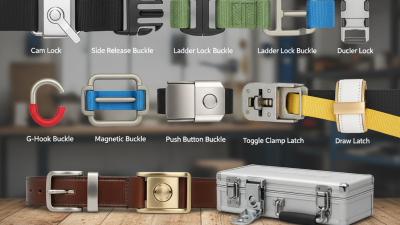
Example planning priorities for comparing buckle locks across different applications
The scores are illustrative planning values, not test results or industry standards. Rank each requirement for your specific use case, then confirm load ratings, cycle-life data, environmental resistance, and security performance with the supplier.
A buckle lock should match the job, not just the product photo. Keyed models suit controlled access; combination types avoid managing spare keys. Integrated locking buckles can work well on bags, cases, or straps, but only when their closure geometry matches the existing hardware. Fit matters. Measure strap width, buckle opening, pin diameter, and clearance before ordering. A few millimeters can prevent a clean fit.
Material choice changes maintenance needs. Plated steel is often economical, while stainless steel resists corrosion better in damp environments. The World Stainless Association’s Stainless Steel in Figures 2024 report records 58.4 million tonnes of stainless-steel production in 2023. That scale shows broad material availability, not that every lock uses the same grade or finish. Ask suppliers to identify the steel grade and coating. ASTM B117 salt-spray testing can compare corrosion resistance under controlled conditions, but it does not predict exact outdoor service life.
Check compatibility under real use. Test the lock with the intended strap, load direction, and nearby fittings; a clasp that closes on a sample may bind when fabric is thicker. Confirm whether the lock needs a separate hasp or mounting point. I still find this easy to overlook. Request dimensioned drawings and test samples before approving a large order, especially when specifications differ across suppliers.
7 Buckle Lock Buying Tips for Global Buyers
A buckle lock may look simple, but small differences affect fit, security, and service life. Check the body material, pin alignment, and finish under bright light. Rough edges can snag straps, while loose pins may shift during repeated use. Ask for the rated load and the test method behind it. A number without context is hard to compare.
Tip: Request the applicable safety standard, a current test report, and the laboratory’s details. Confirm that the report covers the exact model and materials offered, not a similar product. Requirements vary by market, so verify which rules apply to your destination. Check dimensions against your strap, including width and thickness. Small details matter.
Before placing a large order, test production samples under realistic conditions. Open and close the buckle repeatedly, inspect the hinge, and check whether the lock stays engaged when pulled from different angles. If corrosion resistance matters, ask how it was tested and review the result. A neat sample is useful, but it cannot prove every batch will match. Set clear inspection criteria and keep records of approved samples, reports, and any changes to materials or construction.
| No. | Buying Tip | What to Check | Useful Verification | Buyer Acceptance Basis |
|---|---|---|---|---|
| 01 | Define the application and load | Identify what the buckle lock will secure, the expected direction of force, operating environment, and whether failure could create a safety risk. | Document the intended use, operating conditions, and required working and failure loads before comparing products. | Use requirements established for the actual application. Do not treat a supplier’s breaking-load figure as a safe working load unless the rating and safety factor are clearly defined. |
| 02 | Check materials and construction | Confirm the specified base material, coating or finish, component thickness, edges, joints, and the consistency of parts that carry the load. | Review the material specification and inspect production samples. Where material composition matters, request a suitable test report or material certificate. | Compare samples and documents with the approved drawing and purchase specification; require disclosure of any material or process change. |
| 03 | Test locking and release function | Check whether the mechanism engages fully, resists unintended opening, and can still be deliberately released under the stated operating conditions. | Run repeated open-and-close cycles and check engagement, release force, jamming, wear, and visible damage. Set the cycle count and test conditions in advance. | Agree on the cycle count and allowable functional changes with the supplier. There is no single universal cycle-life requirement for every buckle-lock application. |
| 04 | Verify strength and load performance | Check the complete assembly, including the buckle, mating parts, attachment points, and any connected strap or fitting. | Use a calibrated force-testing setup and a documented test method appropriate to the product. Record loading direction, rate, peak load, failure mode, and sample identification. | Compare results with the buyer’s specified working load, proof load, and minimum failure load. Define these values for the intended use rather than relying on an unspecified “high strength” claim. |
| 05 | Review safety and market requirements | Requirements depend on the destination market, product category, and end use. A buckle used in personal protective equipment or child-related products may face requirements different from a general-purpose fastener. | Ask for the applicable regulation or product standard, the exact model and configuration covered, and current supporting test reports or declarations where required. | Verify applicability with the relevant regulator, qualified laboratory, or compliance specialist. A general quality certificate alone does not establish compliance for a specific product. |
| 06 | Assess corrosion and environmental resistance | Consider moisture, salt exposure, temperature, ultraviolet light, cleaning agents, and other conditions relevant to the product’s service environment. | Select tests suited to the material and use. For example, ISO 9227 describes neutral salt-spray testing; the exposure duration and pass/fail criteria must be specified separately. | Agree on test conditions, sample preparation, inspection method, and allowable corrosion or finish change. A test method by itself does not guarantee service life. |
| 07 | Control batch quality and product changes | Check dimensions, finish, operation, marking, packaging, and traceability across production lots. Confirm how defects and design changes are handled. | Approve a reference sample, define incoming inspection and sampling rules, and request lot-level inspection records. Use an ISO/IEC 17025-accredited laboratory when independent testing is needed. | Set measurable tolerances, defect classifications, record requirements, and written approval for changes to materials, tooling, or manufacturing processes. |
Note: Test methods and compliance requirements depend on the buckle-lock design and its intended use. Agree on measurable acceptance criteria before production or testing; no single standard or test result applies to every buckle lock.
A buckle lock can look sturdy in a product photo. That proves little. Ask suppliers for drawings, material specifications, finish details, and test records for the exact model. Check that the locking body, shackle, and keys match the quoted configuration. Request a sample and inspect the key turn, latch alignment, sharp edges, and finish consistency. Small flaws show up quickly.
Supplier answers matter too. A reliable contact should explain production steps, inspection points, and how defects are handled without dodging basic questions. Compare quotes line by line: unit price, setup charges, packaging, freight terms, and sample costs. The lowest number may omit something important. It is easy to overvalue a polished sample; check the less exciting paperwork too.
Minimum order terms deserve equal attention. Ask whether the MOQ applies per model, finish, or combined shipment, and confirm price breaks in writing. If you are testing demand, a smaller paid trial order may be worth more than a discount on excess stock. Also confirm production lead time and reorder timing. These estimates can shift, so leave room for delays.
For a buckle lock, customization starts with the fit. Confirm the strap width, buckle dimensions, metal or plastic grade, finish, and locking direction. A small mismatch can make installation awkward. Ask for a drawing and a physical sample before approving a large order. A polished sample is reassuring, but it may hide a weak spring after repeated use. Request test details, including the conditions and number of operating cycles. Small details matter.
Shipping needs the same precision as the product specification. Ask for the production lead time, estimated dispatch date, shipping method, carton dimensions, and shipment terms in writing. Confirm who arranges transport and which charges are included; import fees can vary by destination. If delivery timing is critical, build in a buffer. A written estimate helps, but it cannot prevent every delay.
After-sales support is easiest to judge before payment. Clarify how to report defects, what evidence is required, how replacement parts are supplied, and the expected response time. Ask whether support covers both product faults and installation questions. Keep the approved sample, specification sheet, and order correspondence together. It sounds fussy, perhaps, but these records make differences easier to explain if the delivered locks do not match expectations.