Best China Flat Lock Supplier for Global Buyers?
Choosing the best China Flat Lock supplier requires more than comparing catalogue prices. Global buyers need stable stitches, accurate gauges, responsive service, and documented quality controls.
Textile Exchange’s Materials Market Report 2024 reports that global fibre production reached 124 million tonnes in 2023. It may rise to 160 million tonnes by 2030. This growth increases pressure on factories to improve productivity, fabric handling, and seam durability. Flat Lock machines support these needs, especially in sportswear, underwear, knitwear, and technical garments.
A practical sourcing view comes from apparel consultant David Birnbaum: “The best supplier is not necessarily the lowest-cost supplier.” Buyers should test this principle directly. Request sample seams on cotton jersey, stretch polyester, and rib fabric. Check skipped stitches, thread tension, differential feed, noise, and operator access. Ask for motor specifications, spare-part lead times, training records, and warranty terms. ISO 9001 certification can support confidence, but it does not replace factory verification.
The International Trade Centre also emphasizes supplier capability, transparency, and production consistency in international sourcing. Those factors matter when one defective machine can interrupt an entire sewing line. A competitive supplier should provide inspection reports, clear export documentation, and after-sales support in the buyer’s time zone.
No supplier is perfect.
Some factories present polished samples but weak service systems. Others offer excellent engineering but limited communication. A careful audit, trial order, and written performance agreement reduce this risk. The strongest China Flat Lock supplier is not simply the cheapest option. It is the partner that performs consistently after payment, installation, and production launch.
What Is a Flat Lock Supplier and Why Source from China?
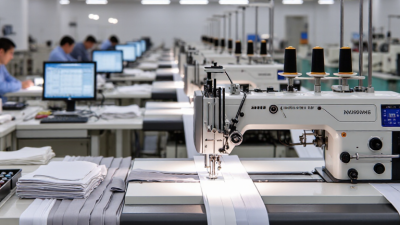
A flat lock supplier manufactures and supplies machines for smooth, flexible seams in knitwear and sportswear. These suppliers may also provide needles, gauges, spare parts, training, and maintenance support. China is a practical sourcing option because its industrial sewing sector includes machining, electronics, assembly, and export services in one supply network. Buyers can compare specifications more easily.
From factory visits and equipment checks, I have found that technical detail matters more than attractive catalog photos. Ask for stitch types, sewing speed, fabric range, motor options, and replacement-part availability. A reliable supplier should share test videos using fabric similar to yours. Request sample seams before placing a large order. Some suppliers offer customization, but unclear drawings can create delays and incorrect parts. That risk is easy to underestimate.
Tips: Check the supplier’s business license, production address, inspection records, and warranty terms. Confirm voltage, plug standards, packaging strength, and installation support. Ask how quickly common parts can ship. Do not judge quality from price alone. A cheaper machine may require more adjustments, especially with lightweight or highly elastic fabric. I would also keep written records of every technical promise. Small details often become expensive misunderstandings.
Key Criteria for Choosing the Best China Flat Lock Supplier
Choosing the best China flat lock supplier requires more than comparing online prices. Buyers should examine machine performance, production control, and communication quality. A reliable supplier should provide clear specifications for stitch width, operating speed, motor options, and compatible fabrics. Ask for sample sewing with your actual materials. Photos are not enough.
Request inspection records, load testing results, and details about quality-control procedures. Experienced suppliers can explain how they reduce skipped stitches, thread breakage, vibration, and uneven seams.
They should also offer practical spare-parts support, clear warranty terms, and realistic delivery schedules. Check whether technicians can provide installation guidance through detailed manuals, video calls, or on-site service when available.
Certification documents deserve careful review. Confirm that they match the exact machine model and current production requirements. A factory audit can reveal storage conditions, calibration practices, and final inspection routines. Small details matter. Ask how defects are recorded and corrected.
Price alone can mislead. A cheaper machine may create higher maintenance costs or inconsistent output. However, an expensive quotation does not automatically prove better quality. I have seen polished presentations hide weak after-sales support. That risk deserves attention. Compare total ownership costs, response times, replacement-part availability, and payment protection. Suppliers should answer technical questions directly, not only send sales brochures. A trial order can expose problems before a larger purchase. Even then, buyers should document every agreed specification because verbal promises are easy to misunderstand.
Comparing Prices, Production Capacity, and Customization Options
Best China Flat Lock Supplier for Global Buyers?
Price is only the opening question when comparing Chinese flat lock suppliers.
Grand View Research estimates that the global industrial sewing machine market will grow at about 5% annually through 2030. Demand is moving toward faster, more specialized equipment. In practical quotations, basic flat lock machines may cost around US$700–1,500, while computerized or automated models can exceed US$2,000. These figures vary with motors, gauges, attachments, and testing standards. A low quote may exclude spare needles, shipping protection, or operator training.
Production capacity needs stronger evidence.
Ask for monthly output, assembly-line photographs, inspection records, and recent sample videos. A supplier producing 500 units monthly may offer better attention than one promising 10,000 units without proof. China remains a major textile manufacturing center; WTO data reported China’s textile exports at roughly one-third of global textile exports in 2023. That ecosystem can support parts availability and technical labor. Still, capacity does not automatically mean consistent quality. I have seen attractive samples fail after extended operation. That risk deserves discussion.
Customization should be measured, not advertised.
Confirm stitch width, needle spacing, fabric range, motor voltage, control-panel language, packaging, and logo placement. Request a pre-shipment test using your actual fabric. Ask whether replacement parts remain available for three to five years. Small changes can affect price and delivery time. Some suppliers answer quickly but provide vague tolerances. That is a warning. Independent inspection adds cost, yet it may reveal uneven feeding, excessive vibration, or poorly finished castings before payment.
How Global Buyers Can Verify and Partner with a Reliable Supplier
Choosing a China flat-lock supplier requires more than comparing machine prices. Global buyers should verify the factory behind the quotation. The World Bank’s 2023 Logistics Performance Index assessed 139 economies, including shipment tracking and delivery timeliness. Ask the supplier for production schedules, export records, and a tracking process for spare parts. A responsive sales contact is useful, but documented performance is stronger evidence.
Request a live factory video or an independent audit. Check assembly areas, electrical testing, calibration records, worker safety, and finished-machine storage. For each flat-lock model, inspect the motor, needle feed, lubrication system, and stitch consistency. Order a sample unit before placing a larger purchase. Test it with your actual fabric, thread, voltage, and operating speed. Keep the test results signed and dated. Small details matter.
Certification alone is not enough. Verify certificate numbers with the issuing body, and confirm whether the certificate covers the exact factory and model. The International Labour Organization reported nearly 3 million work-related deaths annually in its 2023 global estimates, so supplier due diligence should include workplace safety, not only product quality. I have seen polished documents hide weak after-sales support. That risk is easy to underestimate. Put warranty response times, replacement-part availability, inspection rights, and delivery penalties in the contract. A reliable partner should accept measurable checks, even when the conversation becomes uncomfortable.

 Rod lock